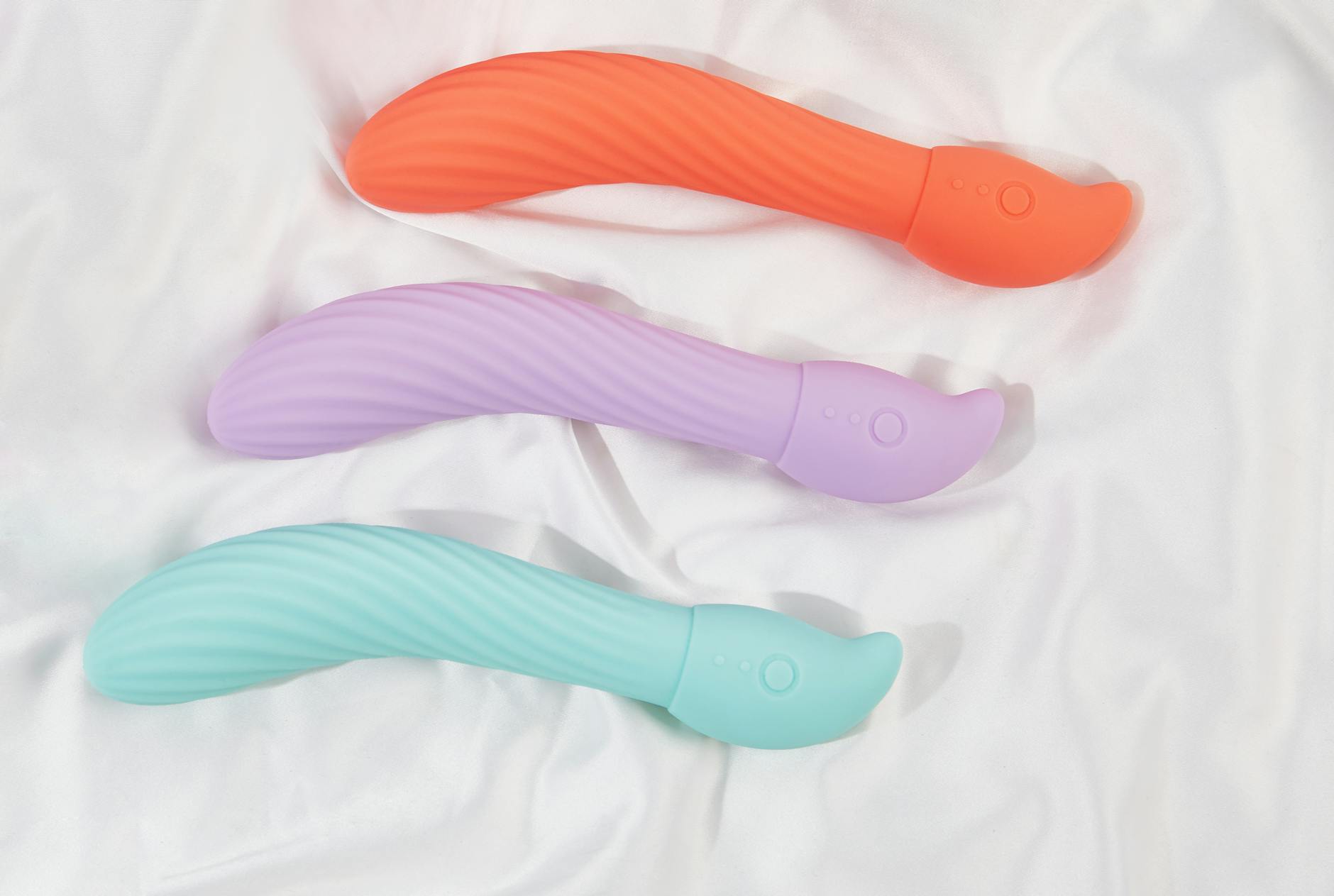
The truth about the toy conversation
Let's be real. You've probably rehearsed this conversation in your head about forty times. Each rehearsal gets worse. By the time you're ready to actually open your mouth, you've convinced yourself that mentioning a lemon vibrator is somehow equivalent to saying your partner isn't enough. It's not.
Here's what I've seen in my practice: the conversation fails not because the idea is bad, but because the framing is off. You either lead with shame ("I have this weird thing I want to try") or you lead with criticism ("Maybe if we used a toy, things would be better"). Both backfire. Both make it about what's missing instead of what's possible.
The good news? This is completely fixable.
Why the timing matters more than the words
You cannot have this conversation during sex. You also cannot have it during conflict, when you're stressed, or when your partner is distracted. This isn't a revelation that lands in a text message at 11 p.m. You need calm, private time when you're both relaxed and can actually think.
The best moment is usually a random weeknight. Not before bed when sex is expected. Not after sex when the conversation will feel like criticism. Just a regular Tuesday, sitting on the couch with coffee or tea, when there's no performance pressure hanging over anyone's head.
You also don't need a perfect mood. Just a moment where you can both focus. Honest conversations don't need candles.
How to actually start it
Don't ask permission. Don't treat a vibrator like a scary confession. Instead, position it as curiosity.
"I read this article about clitoral vibrators and it got me thinking. I've been curious about trying one. Would you be open to exploring that together?"
That's it. No apology. No setup that makes it sound like a last resort. You're naming something you're interested in and inviting your partner into that interest.
Here's what that does: it removes the implication that something is wrong. You're not saying "we need to fix our sex life." You're saying "I want to try something new." Those are very different statements.
Why specific products work better than vague suggestions
If you say "I want to try a vibrator," your partner's brain fills in the blanks with their anxiety. They imagine whatever they imagine. Instead, show them the actual thing.
The Lem is designed to feel nothing like a traditional vibrator. It uses gentle suction rather than aggressive buzzing. It's elegant. It looks intentional. Your partner can actually see what you're talking about, which removes mystery and replaces it with clarity.
Giving them something concrete to react to short-circuits the shame spiral. They're not imagining some raunchy thing from a sketchy website. They're looking at a real product from a real company that makes things specifically for pleasure.
You might say: "This is the one I've been thinking about. It works really differently than what I thought vibrators did. Want to look at it together?"
The conversation patterns that actually work
Three frameworks that I've seen land consistently:
The curiosity frame. "I've been reading about this, and I'm genuinely curious. Are you open to trying it?" This positions it as exploration, not criticism.
The pleasure frame. "I think this might help us both feel more. I'm interested in finding what works for my body." Notice: "my body," not "our situation." It's about discovery, not repair.
The partnership frame. "I want to figure this out together. I trust you, and I want us to explore what feels good for both of us." This makes it collaborative, not solo.
What you're doing with each of these is separating the toy from the relationship problem. You're saying: I want pleasure. I want to explore. I want to do it with you. Those are three different, powerful statements.
What to do if your partner says no
They might. And that's worth taking seriously.
First, don't push. A "not right now" is different from "absolutely not," and you'll learn which one it is by asking. "Is this not something you're interested in, or is it a timing thing?" That gives them a way to be honest.
If it's a timing thing, let it go and circle back in a few months. If it's a hard no, the real conversation is different. That's about understanding what the resistance is about. Is it insecurity? Is it a boundary? Is it just not their thing? You won't know until you ask without judgment.
Here's the thing, though: most partners surprise you. The conversation you've been dreading in your head often goes better than you expect because you're not leading with shame. You're leading with honesty.
The first time you actually use it together
Don't make it a big production. Don't schedule it. Don't build it up so much that it has to be perfect.
The best first time is often spontaneous. You're already being intimate, and you introduce it casually. "Want to try it?" Not a referendum. Just an offer. Your partner can say yes or not yet, and either answer is fine.
Start with lower settings. Use lube, even if you think you don't need it. Go slow. Talk to each other about what feels good. This is exploration, not a performance.
And here's the reality: the first time might be awkward. You might laugh. You might stop and try again later. That's completely normal. Introducing anything new into intimacy has a learning curve. The point isn't that it's perfect immediately. The point is that you tried something together.
The conversation you're actually having
When you strip away the anxiety, what you're really saying is: I trust you. I want to explore pleasure with you. I think we can have fun together. Those are good things to communicate.
Your partner isn't going to hear "I want a toy" and think "I'm not enough." They're going to hear "I want to experience more with you." That's a completely different message.
The awkwardness you're anticipating lives in silence. The moment you actually speak, it usually dissolves. You'll find that your partner has probably been curious too, or at least open to it. People are more game for this stuff than we assume. We just don't talk about it.
People also ask
Q: What if my partner thinks I want a vibrator because I'm not attracted to them?
A: Lead with the pleasure angle, not the problem angle. "I've been curious about my own body and what feels good" is very different from "our sex isn't working." Most insecurity melts when you make it clear that this is about expansion, not replacement.
Q: Should I buy the vibrator before talking to them, or ask first?
A: Ask first. Showing up with a purchased toy can feel like you've already decided, which removes their agency. Asking first makes it collaborative. If they're interested, you buy it together or they pick the color. That's a smaller thing, but it matters.
Q: How do I bring it up if we haven't talked about sex much in our relationship?
A: Actually, this might be easier than you think. You can frame it as the opener to a broader conversation. "I want us to talk more about what we both enjoy. I've been thinking about trying a lemon vibrator, and I wanted to see if you'd be interested." You're not just introducing a toy. You're introducing the idea that pleasure is something you discuss.
Q: What if they ask why I want one specifically?
A: Be honest. "I read about how they work differently, and I got curious." Or "I've been thinking about exploring my own pleasure more." Or "I think it could feel really good for both of us." You don't need a heavy justification. Curiosity is enough.
Q: Is there a best way to show them the product?
A: Yes. Look at it together on your phone or computer. Let them hold it if they want. Talk about how it works. Ask what they think. This isn't a sales pitch. It's just shared curiosity. The Lem is straightforward to understand. Its design is its own case for why it's interesting.
Q: What if we try it and it doesn't work for us?
A: Then you tried something together and learned something about what you both like. That's still a win. Not every exploration needs to become a regular habit. But the fact that you tried, communicated, and stayed curious together? That's the actual prize.
The after-conversation moment
Once you've had this talk, something shifts. You've moved from alone in your own head to actually vulnerable with another person. That takes courage, and your partner will sense that.
Whether they say yes or not, you've opened a door that doesn't close. You've said "pleasure matters to me" and "I trust you enough to ask for what I want." Those are foundation-level things for deeper intimacy.
The vibrator is almost secondary to what you've actually done: you've initiated a conversation about desire in a way that didn't blame, shame, or criticize. You've made pleasure discussable. You've made curiosity safe. That's the real work, and it's worth it.